


Hardstyle vs Sport Kettlebell: Which Style Is Right for You?
If you’ve spent any time in the kettlebell world, you’ve probably come across two very different camps: hardstyle and sport (also called kettlebell sport or Girevoy Sport). Both approaches use the same piece of iron, but the philosophy, technique, and goals behind each one are worlds apart.
Understanding the difference between hardstyle and sport kettlebell training isn’t just an academic exercise. It directly influences how you swing, press, and clean — and ultimately, what results you get. Whether you’re a beginner trying to pick a starting point or an intermediate lifter looking to specialize, this guide breaks down everything you need to know.
—
What Is Hardstyle Kettlebell Training?
Hardstyle is the approach popularized by Pavel Tsatsouline and StrongFirst (formerly RKC — Russian Kettlebell Challenge). The core philosophy is tension. Hardstyle training treats every rep as an opportunity to generate maximum power, recruit as much muscle as possible, and build functional strength.
Key Characteristics of Hardstyle
- **Ballistic tension:** You generate explosive power on the upswing and absorb force aggressively on the downswing.
- **Breathing:** Sharp, pressurized exhales (sometimes called “power breathing”) are used to create intra-abdominal pressure.
- **Glute contraction:** At the top of every swing, you lock out hard — glutes, abs, lats all fire at once.
- **Hike pass:** The backswing is aggressive and loaded, like a center hiking a football.
- **Bell path:** The kettlebell arcs more and travels in a shorter range of motion.
- **Shorter sets:** Because every rep demands high muscular effort, sets tend to be shorter with longer rest periods.
Hardstyle is fundamentally about strength and power. It borrows heavily from powerlifting and martial arts concepts. The idea is simple: practice generating maximum force, and your body gets stronger, denser, and more explosive.
This style is excellent for people who want to build strength, burn fat efficiently in short bursts, and develop athletic qualities like hip power and core stability. If you’ve seen popular programs like Pavel’s “Simple and Sinister” or the StrongFirst plans, you’ve been looking at hardstyle methodology.
—
What Is Sport Kettlebell Training (Girevoy Sport)?
Kettlebell sport — or Girevoy Sport (GS) — has roots in Soviet-era Russia and is an organized competitive discipline. In competition, athletes perform as many reps as possible of the snatch, jerk, or long cycle (clean and jerk) in a ten-minute window. The goal is efficiency, not maximal force production.
Key Characteristics of Sport Style
- **Relaxation over tension:** The opposite of hardstyle. Between the “working” parts of the rep, the lifter actively seeks to relax and conserve energy.
- **Breathing rhythm:** Nasal breathing and a controlled rhythm are used to stay aerobic and delay fatigue over long sets.
- **Fixation:** At the top of every rep, the bell must be fixed (still) with the arm fully locked out — a rule in competition.
- **Backswing:** The backswing is pendulum-like, smooth, and pendulum-style rather than aggressively loaded.
- **Longer sets:** Sport training is built around continuous sets of 5–10+ minutes, training the cardiovascular and muscular endurance systems simultaneously.
- **Bell path:** The bell stays close to the body, moving in a longer arc to use momentum and reduce muscle work.
The competition kettlebells used in sport training are also different from standard cast iron bells. They’re the same size regardless of weight (so technique feels the same as you progress), made from steel, and have a larger window and flat base. You can read more about this equipment difference in our guide on cast iron vs competition kettlebell.
Sport style builds extraordinary aerobic capacity, grip endurance, and lean muscle over time. It’s less about raw power and more about sustainable, repeatable output.
—
Hardstyle vs Sport Kettlebell: A Side-by-Side Comparison
| Feature | Hardstyle | Sport (Girevoy) |
|—|—|—|
| Primary goal | Strength, power, fat loss | Endurance, rep output, competition |
| Tension approach | Maximum tension each rep | Minimum necessary tension |
| Set length | Short (10–20 reps) | Long (5–10+ minutes) |
| Breathing | Explosive, pressurized | Rhythmic, nasal-focused |
| Backswing | Aggressive hike pass | Smooth pendulum |
| Bell at top | Hard lockout, glute squeeze | Fixed lockout (arm, no body tension) |
| Best for | General fitness, athletes, strength | Competitive lifters, endurance athletes |
| Equipment | Cast iron or competition bells | Competition-spec steel bells |
| Learning curve | Moderate | Steep (technique is very nuanced) |
—
Which Style Builds More Muscle and Burns More Calories?
This is one of the most common questions, and the honest answer is: it depends on the context.
Hardstyle tends to burn more calories per minute. Because every rep involves maximum tension and explosive force production, your heart rate spikes quickly and your muscles work harder in a shorter period. If you’re doing a hardstyle swing session or a kettlebell HIIT circuit, you’re working at high intensity. This is excellent for fat loss and metabolic conditioning. If calorie burn is a priority for you, check out our guide on kettlebell workout calories burned for a fuller breakdown.
Sport style builds more endurance-specific muscle adaptations. The long sets and high rep counts develop slow-twitch muscle fibers, cardiovascular capacity, and connective tissue resilience in ways that hardstyle doesn’t emphasize. Over months and years, sport lifters develop very lean, functional physiques — but the process is slow and demands technical mastery.
For building raw strength and adding muscle mass, hardstyle edges ahead for most people. The principles align closely with progressive overload and strength training fundamentals. If that’s your goal, you’ll also want to check out our guide on how to build muscle with kettlebells.
—
Which Style Is Better for Beginners?
Most coaches and trainers recommend starting with hardstyle, and there are good reasons for that.
Hardstyle technique is more forgiving to learn. The cues are intuitive — hinge, hike, explode, squeeze — and the shorter sets mean you have time to think about form between reps. You can drill the fundamentals of the hip hinge, the rack position, and the swing pattern without being overwhelmed by managing ten straight minutes of movement.
Sport technique, while elegant and efficient once mastered, requires a high level of proprioception and body awareness. The subtle timing differences in the backswing, the shoulder insertion during the snatch, and the breathing rhythm all take months to ingrain properly. Getting sport technique wrong for long periods can actually reinforce bad habits that are harder to break later.
That said, if you have access to a qualified kettlebell sport coach and you’re drawn to competition, there’s no rule against starting there. Some people find the goal-oriented nature of sport training highly motivating from day one.
—
Can You Combine Hardstyle and Sport Techniques?
This is a hotly debated topic in kettlebell communities, and opinions are strong on both sides.
Purists in the sport camp argue that mixing the two creates confusion and compromises the refined efficiency of sport mechanics. Hardstyle advocates sometimes warn that relaxing tension during sport-style practice can blunt power development.
In practice, most recreational lifters don’t need to pick a lane and stay there forever. Many athletes use hardstyle swings and deadlifts for strength development while incorporating longer, more rhythmic snatch sets for conditioning. Hybrid programs exist and can work well.
The key is intentionality. Know which style you’re practicing in a given session, why you’re using it, and what adaptation you’re training for. Blending without awareness is where people get into trouble.
—
Choosing the Right Kettlebell for Each Style
The equipment you use actually matters here. Hardstyle training is commonly done with cast iron kettlebells — the classic cannonball shape with a fixed handle. These are widely available, durable, and come in a range of weights. They’re the right tool for most general fitness and strength programs.
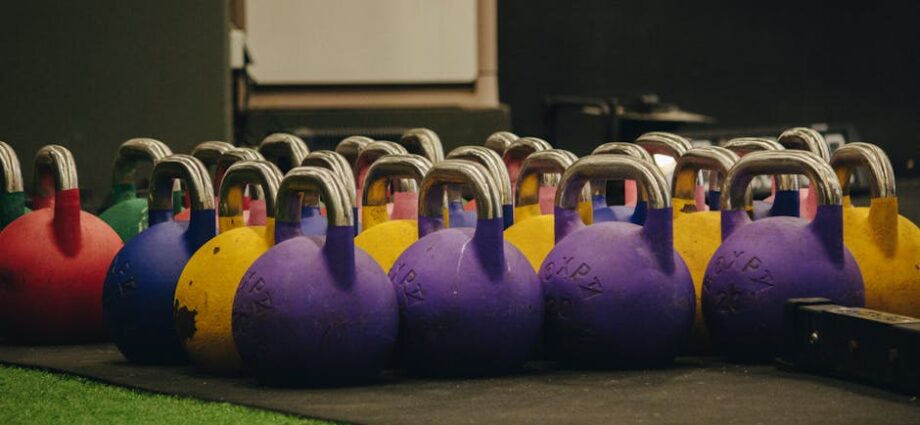
Sport kettlebells (also called competition kettlebells) are made from steel and are a fixed size regardless of weight. The handle diameter is also standardized, which matters a lot during long sets where your hand position has to be perfectly consistent to avoid blisters and fatigue. If you’re pursuing kettlebell sport or simply want the handle uniformity for long-cycle work, competition bells are worth the investment.
Budget is also a factor. Cast iron bells are generally less expensive and more versatile for mixed training. Our best budget kettlebell guide can help you find a quality option without overspending.
—
Conclusion
Hardstyle and sport kettlebell training are not competing philosophies — they’re different tools built for different outcomes. Hardstyle is about strength, power, and intensity. Sport is about efficiency, endurance, and competitive performance.
For most people starting out, hardstyle provides a more accessible foundation. The cues are clear, the sets are manageable, and the strength gains come quickly. As your fitness evolves, you can explore sport techniques to build conditioning, or pursue competition if that interests you.
There’s no wrong answer here — only the answer that fits your goals. Whatever path you choose, kettlebell training done consistently and with good technique will deliver results that few other tools can match.
—
Frequently Asked Questions
Is hardstyle or sport kettlebell better for fat loss?
Hardstyle training tends to be better for fat loss in the short term because the high-tension, explosive reps elevate heart rate quickly and burn more calories per minute. However, sport-style training’s long sets also provide significant metabolic conditioning that can support fat loss over time.
Can beginners learn sport kettlebell technique?
Beginners can learn sport technique, but it has a steeper learning curve than hardstyle. The subtle mechanics of the backswing, shoulder insertion, and breathing rhythm take time to develop. Most coaches recommend mastering basic hardstyle fundamentals first before transitioning to sport technique.
Do I need a different kettlebell for sport vs hardstyle training?
Technically no — you can practice both with a standard cast iron kettlebell. However, serious sport practitioners use competition-spec steel kettlebells because they have standardized dimensions across all weights, which is important for consistent technique and grip during long sets.
Is hardstyle safe for the lower back?
Yes, when performed correctly. Hardstyle emphasizes a strong hip hinge, neutral spine, and braced core — all of which protect the lower back. The technique is actually used therapeutically to help people recover from and prevent lower back problems. Proper coaching is important when learning.