


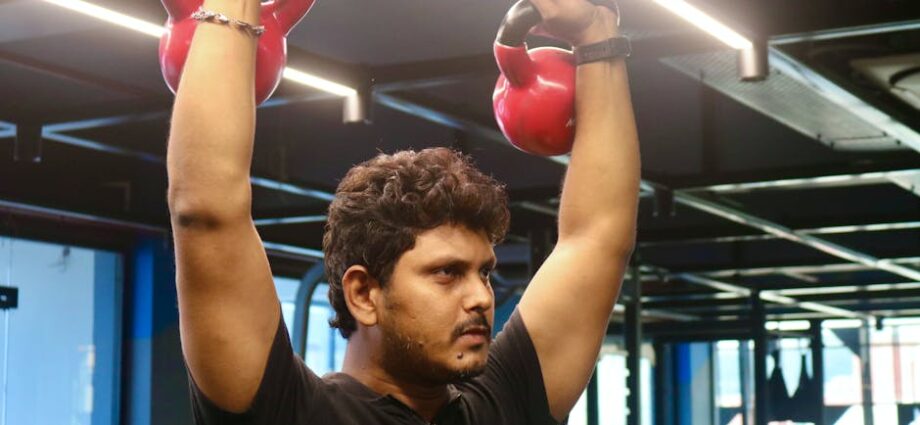
Kettlebell Clean and Press Tutorial: Master This Full-Body Strength Movement
The kettlebell clean and press is one of the most rewarding movements you can add to your training. It combines explosive hip power, total-body coordination, and serious overhead strength into a single fluid sequence. Done well, it builds muscle, burns calories, and trains your body to work as one connected unit — not just a collection of isolated parts.
But it also has a learning curve. The clean portion trips up a lot of beginners, and sloppy technique under load can put unnecessary strain on your wrists, lower back, and shoulders. This tutorial walks you through every stage of the movement — from setup to lockout — so you can train it with confidence and get results without getting hurt.
Whether you’re brand new to kettlebells or trying to clean up form you’ve had for years, this guide covers everything you need.
—
What Is the Kettlebell Clean and Press?
The kettlebell clean and press is a two-part compound movement:
1. The Clean — You lift the kettlebell from the floor (or a swing position) and “rack” it at shoulder height, resting it against your forearm and upper chest.
2. The Press — From the rack position, you press the kettlebell overhead until your arm is fully locked out.
Together, these two movements work your glutes, hamstrings, hips, core, lats, shoulders, and triceps. It’s genuinely a full-body exercise, which is part of why it’s such a staple in kettlebell programming.
If you’ve already worked on your kettlebell swing form and technique, the clean will feel like a natural progression — it uses the same hip hinge mechanics, just with a different finish.
—
Equipment and Weight Selection
Before you start, make sure you have the right tool for the job.
Choosing the Right Kettlebell
For learning the clean and press, you want a weight that lets you maintain good form through multiple reps without grinding. Most beginners do well starting with:
- **Men:** 12–16 kg (26–35 lb)
- **Women:** 8–12 kg (18–26 lb)
If you’re unsure where to start, check out our guide on how to choose the right kettlebell weight — it breaks down selection by goal, fitness level, and movement type.
You’ll also want a kettlebell with a smooth, well-finished handle. Rough handles cause unnecessary friction and can tear the skin on your palm and fingers. If you’re shopping for a new bell, our best kettlebell brands reviewed guide covers the top options across every budget.
—
The Kettlebell Clean: Step-by-Step Breakdown
Getting the clean right is the foundation of the whole movement. Mess this up, and the press will suffer — or worse, you’ll bang your wrist every rep and wonder why anyone enjoys this exercise.
Step 1: Set Up Your Starting Position
Place the kettlebell on the floor slightly in front of you, between your feet. Stand with your feet about hip-width apart. Hinge at the hips, push them back, and grab the handle with one hand. Your back should be flat, chest up, and shoulder packed down.
This is the same starting position as a single-arm swing — if that feels unfamiliar, spend time building your hip hinge mechanics first.
Step 2: The Hip Drive (Same as the Swing)
Initiate the clean by driving your hips forward explosively, just like you would in a kettlebell swing. The bell will start to float upward from the momentum your hips generate — not from your arm pulling.
This is critical: the power comes from your hips, not your bicep. If you’re muscle-curling the bell up, you’ll develop bad habits and your forearm will pay the price.
Step 3: Guide the Bell into the Rack
As the bell floats up, your elbow pulls back and close to your body (think: elbow to your hip pocket). The bell should travel in a tight arc close to your centerline — not out in a wide loop. As it reaches the top, you “punch” your hand through the handle so the bell lands softly against your forearm and upper chest.
The rack position:
- Bell resting on the back of your forearm and upper chest
- Elbow pointing down, tucked close to your body
- Wrist straight (not bent back)
- Shoulder packed, not shrugged up
- Hips and core braced
If the bell is crashing into your forearm on every rep, the arc is too wide. Work on pulling your elbow in tighter and letting the bell travel closer to your body.
Common Clean Mistakes to Avoid
- **Looping the bell out wide** — causes wrist banging and shoulder strain
- **Using arm strength instead of hip power** — tires your arm and limits the weight you can use
- **Letting the wrist bend back** in the rack — causes discomfort and instability under load
- **Not packing the shoulder** — leaves the joint unsupported and sets up a weak press
- **Crashing into the rack position** — the bell should “float” in, not slam down
—
The Kettlebell Press: Step-by-Step Breakdown
Once you’re locked into a solid rack, the press is your chance to build serious overhead strength.
Step 1: Brace Before You Press
Before the bell goes anywhere, take a breath, brace your core, squeeze your glutes, and press your feet into the floor. Think about creating full-body tension. A weak base means a weak press.
Step 2: Press the Bell Overhead
Drive the bell upward and slightly back, so it finishes directly over your shoulder — not out in front of your face. Your elbow travels out and slightly forward as the bell rises. At the top:
- Arm fully locked out
- Bell over your shoulder (not in front of it)
- Bicep close to or touching your ear
- Core and glutes still braced
- Standing tall, don’t lean to the opposite side
Step 3: Lower Under Control
Reverse the movement with control. Don’t just drop the bell back to the rack. Lower it deliberately — this builds strength and protects your shoulder joint. From the rack, you can either re-clean or lower back to the swing position to start the next rep.
Common Press Mistakes to Avoid
- **Pressing the bell forward** instead of straight overhead — puts the shoulder in a poor position
- **Side-bending (lateral lean)** to get the bell up — this is a red flag that the weight is too heavy
- **Losing core tension** mid-rep — causes your lower back to overextend
- **Locking out with a soft elbow** — always reach a true, hard lockout at the top
—
Putting It Together: The Clean and Press as One Movement
Once you’re comfortable with each phase separately, it’s time to link them. The clean and press flows like this:
1. Hip hinge and grab the bell
2. Hip drive launches the clean
3. Bell lands in the rack — absorb it, don’t fight it
4. Brief pause to stabilize
5. Brace and press overhead
6. Lock out, pause
7. Lower back to rack
8. Lower back to swing/hinge to start the next rep
Practice this slowly at first. There’s no rush. Getting the timing right between the clean and the press takes repetition, and that’s completely normal.
A good starting protocol for learning the movement is:
- **3–4 sets of 3–5 reps per arm**
- Rest 90 seconds between sets
- Focus entirely on quality, not speed or load
Once you’re consistently hitting clean reps with good form, you can add volume and work up in weight.
—
How to Program the Kettlebell Clean and Press
The clean and press is versatile enough to be used for strength, conditioning, or both — depending on how you program it.
For Strength: Keep reps low (3–5), rest longer (2–3 minutes), and push the weight.
For Conditioning: Use moderate weight, higher reps (8–12), and shorter rest periods. It becomes a serious cardio challenge fast.
As Part of a Full Routine: The clean and press pairs well with swings, goblet squats, and Turkish get-ups for a complete full-body session. If you’re looking for a structured plan to build around, our 30-minute kettlebell workout routine is a solid starting point.
Weekly Frequency: 2–3 times per week is appropriate for most people. Give your shoulders and hips adequate recovery time, especially early on.
—
Building Up to the Double Kettlebell Clean and Press
Once you’ve mastered the single-arm version, the double kettlebell clean and press is the logical next step. You use two bells simultaneously — one in each hand — which dramatically increases the demand on your core, grip, and overall stability.
The technique is the same, but the coordination required is higher. Don’t rush to doubles. Spend several months getting genuinely strong at the single-arm version first.
A good milestone: pressing your bodyweight overhead using a combination of both bells (i.e., if you weigh 170 lb, pressing two 40 lb bells = 80 lb, not quite there but you get the idea). That level of strength takes time and consistent work, but the clean and press is the exact tool that gets you there.
—
Conclusion
The kettlebell clean and press is a true test of full-body strength, coordination, and athleticism. It’s not the easiest movement to learn, but it’s absolutely worth the investment of time and patience.
Start with a manageable weight. Drill the hip hinge and the rack position separately before combining them. Keep your technique honest — no crashing wrists, no lateral lean, no half-hearted lockouts. Build volume gradually, and let your body adapt.
If you do all of that, the clean and press will reward you with stronger shoulders, a more powerful posterior chain, and a level of functional fitness that crosses over into everything else you do.
Now pick up the bell and get to work.
Frequently Asked Questions
What muscles does the kettlebell clean and press work?
The clean and press is a full-body movement. The clean primarily targets the glutes, hamstrings, hips, and upper back (lats and traps). The press develops the shoulders (deltoids), triceps, and upper chest. Your core and grip work hard throughout both phases to stabilize the movement.
Is the kettlebell clean and press good for beginners?
It can be done by beginners, but it requires learning the hip hinge and kettlebell swing mechanics first. Most coaches recommend mastering the two-handed swing and goblet squat before attempting the clean and press. Starting light and drilling technique slowly is essential to avoid wrist and shoulder issues.
Why does the kettlebell bang my wrist during the clean?
Wrist banging usually happens because the bell is traveling in a wide arc instead of a tight path close to your body. Focus on pulling your elbow back toward your hip as the bell rises, and let the bell travel close to your centerline. Punch your hand through the handle at the top so the bell settles gently rather than crashing onto your forearm.
How heavy should a kettlebell be for the clean and press?
For beginners learning the movement, men typically start with 12–16 kg (26–35 lb) and women with 8–12 kg (18–26 lb). The right weight lets you complete all reps with controlled form — no swaying, no wrist pain, and no grinding out the press at the top. When technique is solid, gradually increase the load.