


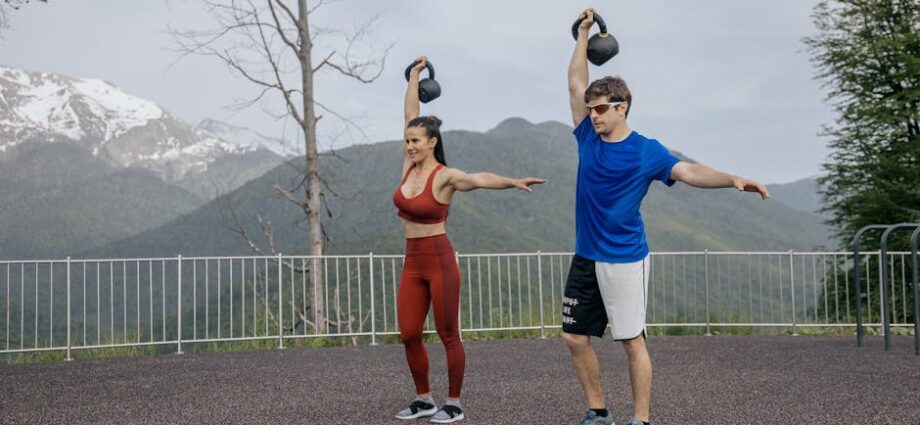
Kettlebell Figure 8 Exercise: Form, Benefits, and Tips for All Levels
If you’re looking for an exercise that challenges your coordination, fires up your core, and builds functional strength all at once, the kettlebell figure 8 is worth your attention. It looks impressive in action — a fluid, weaving movement that passes the kettlebell between your legs in a continuous figure-eight pattern — but it’s also a genuinely effective training tool when done with proper technique.
This guide covers everything you need to know: how to perform the figure 8 correctly, which muscles it targets, the real benefits it delivers, the mistakes to avoid, and how to program it into your routine.
—
What Is the Kettlebell Figure 8 Exercise?
The kettlebell figure 8 is a dynamic movement where you pass a kettlebell between and around your legs in a figure-eight path while maintaining a hip-hinge position. You alternate hands with each pass, keeping your hips low, your back flat, and your core braced throughout.
Unlike isolated exercises, the figure 8 is a full-body coordination drill. It trains the hips, core, grip, and upper back simultaneously while also demanding focus and rhythm. That combination makes it a popular warm-up drill, conditioning finisher, or standalone skill exercise in kettlebell training.
It’s worth noting the difference between the standard figure 8 and the figure 8 to hold — a variation where you pause the bell at your hip in a “loaded” position after each pass, adding an anti-rotation challenge to the movement.
—
Muscles Worked in the Kettlebell Figure 8
The figure 8 is deceptively demanding. Here’s what it’s working:
Core and Obliques
Maintaining a stable, hinged torso while rotating through the pass puts significant demand on your obliques and deep stabilizers. Every hand-off requires your core to resist rotation and extension simultaneously.
Glutes and Hamstrings
The hip-hinge position — similar to the setup for a deadlift or swing — keeps your posterior chain engaged throughout the movement. Your glutes and hamstrings work to hold the position and control the depth of each rep.
Forearms and Grip
Repeatedly catching, controlling, and passing a moving kettlebell builds significant grip endurance. Your forearm flexors work hard during every exchange.
Upper Back and Shoulders
Your rhomboids, traps, and rear deltoids help stabilize the shoulder girdle as the bell moves through different angles. The figure 8 isn’t a pressing movement, but your upper back has to work consistently.
Adductors and Hip Flexors
Passing the bell close to your midline activates the inner thigh muscles, which is a relatively uncommon training stimulus in most kettlebell programs.
—
How to Do the Kettlebell Figure 8 with Proper Form
Getting the technique right from the start protects your lower back and makes the movement far more effective.
Step-by-Step Instructions
1. Set up your stance
Stand with your feet slightly wider than hip-width apart, toes turned out slightly. Hold the kettlebell with both hands or just your right hand to start.
2. Hinge at the hips
Push your hips back, bend your knees slightly, and lower your torso until it’s roughly parallel to the floor — or close to it. Keep your chest up, back flat, and eyes forward. This is your base position for the entire movement.
3. Begin the pass
Start with the kettlebell in your right hand. Swing it between your legs from the right side toward your left hand. Your left hand reaches between your legs from the left side to catch the bell.
4. Continue around the outside
Once your left hand has the bell, bring it around the outside of your left leg, swinging it back between your legs again — this time from the left side toward your right hand.
5. Repeat continuously
Keep passing the bell in a continuous, smooth figure-eight path. The pattern goes: right hand → pass between legs → left hand → around outside of left leg → pass between legs → right hand → around outside of right leg → repeat.
Key form cues to remember:
- Keep your hips low and level throughout — don’t bob up and down
- Brace your core on every rep
- Keep your back flat; never round the lumbar spine
- Let your arms move freely but keep your torso still
- Use a smooth, controlled pace rather than rushing
Choosing the Right Weight
Start lighter than you think you need. A 8–12 kg (18–26 lb) kettlebell is appropriate for most beginners learning the pattern. Once the movement feels natural and your grip is no longer a limiting factor, you can increase the load. The goal is fluency first, load second.
—
Benefits of the Kettlebell Figure 8
1. Builds Functional Core Strength
The figure 8 trains anti-rotation and lateral stability in a way that traditional ab exercises don’t. Because the load is constantly shifting between sides, your core has to work reactively rather than in a fixed, predictable pattern. This translates well to real-world movements and athletic performance.
2. Improves Hip Mobility and Flexibility
Maintaining a deep hip hinge for multiple reps while moving dynamically stretches the hamstrings, opens the hips, and promotes better movement patterns. For people who sit for long periods, this is particularly useful.
3. Develops Coordination and Rhythm
The figure 8 is a skill movement. Learning to time the pass correctly, switch hands smoothly, and maintain positional awareness trains your nervous system as much as your muscles. This carries over to other complex kettlebell movements.
4. Excellent Conditioning Tool
Done for time or high reps, the figure 8 raises your heart rate quickly without requiring heavy loads. It works well as part of a kettlebell HIIT workout or as a warm-up to activate the posterior chain before heavier lifts.
5. Low Impact on Joints
Unlike running or jumping, the figure 8 is a low-impact movement. The hinge position absorbs stress through the hips and core rather than the knees or spine — making it an accessible option for a wide range of people, including those managing joint sensitivity. It fits naturally into a kettlebell workout for seniors when scaled appropriately to lighter weights.
6. Grip and Forearm Endurance
Few exercises train grip endurance as naturally as the figure 8. The constant hand-to-hand transfers under load build forearm and grip stamina that translates directly to swings, cleans, and carries.
—
Common Mistakes to Avoid
Rounding the Lower Back
This is the most common and most serious error. If your lumbar spine rounds during the movement, you’re placing shear stress on the discs — especially as you reach between your legs. Strengthen your hip hinge pattern first and reduce the weight if rounding occurs.
Standing Too Tall
The figure 8 requires a genuine hip hinge, not a slight bend. If you’re standing mostly upright, you can’t create the angle needed to pass the bell cleanly between your legs, and you’ll lose the posterior chain stimulus the exercise provides.
Rushing the Reps
Moving too fast before you understand the pattern leads to sloppy form and dropped bells. Learn the movement at a slow, deliberate pace first, then build speed.
Gripping Too Tight
A white-knuckle grip tires your forearms quickly and reduces the fluency of the hand-off. Hold the bell firmly but not rigidly, and let it roll naturally through your fingers during the pass.
Feet Too Narrow
If your stance is too narrow, there simply isn’t room for the bell to travel between your legs. Widen your stance until the path is clear and comfortable.
—
How to Program the Kettlebell Figure 8
The figure 8 is versatile. Here’s how to use it depending on your goals:
As a warm-up: 2–3 sets of 10 reps per direction with a light bell. Gets the hips, core, and grip ready for heavier work.
As a conditioning finisher: 3–4 rounds of 30–45 seconds on, 30 seconds off at the end of your session. Paired with other bodyweight or kettlebell movements, this creates an effective metabolic circuit.
As a skill drill: Practice 5 minutes of smooth, unbroken figure 8s at a conversational pace. Focus on the quality of each hand-off and positional consistency.
In a full-body program: The figure 8 pairs well with swings, goblet squats, and presses. If you’re following a kettlebell core workout routine, it fits naturally alongside plank variations and carries.
—
Figure 8 Variations to Try
Once the standard figure 8 feels solid, consider these progressions:
- **Figure 8 to Hold:** Pause the bell at your hip after each pass. This adds a strong anti-rotation demand and slows the movement down intentionally.
- **Figure 8 with a Squat:** Add a full squat at the bottom of each pass for greater leg stimulus.
- **Reverse Figure 8:** Change the direction of the pattern to challenge your coordination from a different angle.
- **Heavier Load Figure 8:** Increase the weight once technique is dialed in for more strength-focused stimulus.
—
Conclusion
The kettlebell figure 8 exercise earns its place in a well-rounded kettlebell program. It builds real core strength, improves hip mobility, develops grip endurance, and challenges your coordination in a way that few exercises can match — all without needing heavy loads or complex equipment.
Start with a light bell, master the hip hinge position, and focus on smooth, controlled reps before adding weight or speed. Whether you use it as a warm-up, a conditioning tool, or a standalone skill drill, the figure 8 is a movement that pays dividends across almost every other area of your training.
—
Frequently Asked Questions
Is the kettlebell figure 8 good for beginners?
Yes, with the right approach. Beginners should start with a lighter kettlebell — around 8–12 kg — and practice the movement slowly to learn the hand-off pattern before adding speed or load. The hip hinge position can feel unfamiliar at first, so it helps to practice the hinge separately before combining it with the passing movement.
How heavy should my kettlebell be for figure 8s?
Most people do best starting with a lighter bell than they’d use for swings or squats. An 8–12 kg bell is appropriate for most beginners. Intermediate lifters can work up to 16 kg or more once the technique is solid. The weight should allow smooth, controlled passes without breaking your hip hinge position.
Does the kettlebell figure 8 build abs?
It does train your core, particularly the obliques and deep stabilizers, but it works differently than direct ab exercises. The figure 8 trains anti-rotation and lateral stability under a shifting load, which builds functional core strength. It’s best used alongside other core exercises rather than as your sole abdominal training.
How many reps should I do per set?
For skill and warm-up purposes, 8–12 reps per direction is a good range. For conditioning, working for time — 30 to 45 seconds per set — is effective. Count each full figure-eight loop as one rep, and make sure to perform equal reps or time in both directions to avoid developing asymmetries.